Charging Technology Updates: The Innovations Shaping The Future Of EV Infrastructure
The EV charging industry is entering a new era of innovation. As electric vehicle adoption continues to accelerate worldwide, charging infrastructure is becoming smarter, faster, and more connected than ever before.
Today’s charging stations are no longer simply power delivery points. They are evolving into intelligent energy platforms capable of managing grid demand, communicating with vehicles, supporting renewable energy integration, and delivering seamless user experiences.
For businesses, fleet operators, governments, and property owners, understanding these emerging technologies is becoming essential when planning future EV infrastructure investments.
The Rise Of Ultra-Fast Charging
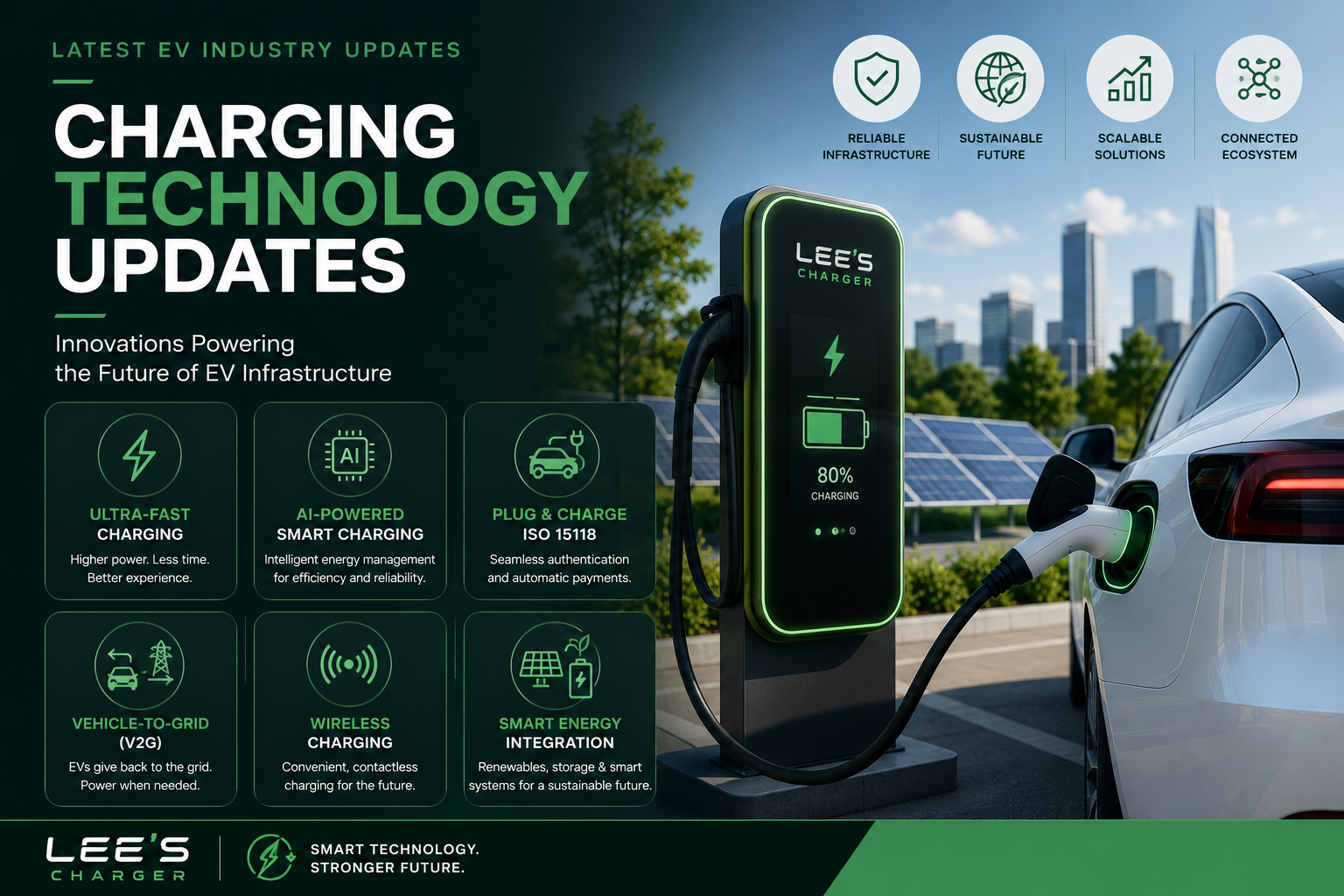
One of the most significant developments in the EV industry is the rapid expansion of ultra-fast charging technology.
Modern DC fast charging stations are now capable of delivering significantly higher power levels than previous generations, reducing charging times and improving convenience for drivers. Industry forecasts indicate that ultra-fast charging infrastructure will continue expanding across commercial corridors, fleet operations, and public charging hubs.
As charging speeds improve, EV drivers can spend less time waiting and more time on the road, helping accelerate the transition to electric transportation.
AI-Powered Smart Charging Networks
Artificial Intelligence is becoming a major component of modern charging infrastructure.
AI-powered charging platforms can:
• Optimize charging schedules
• Balance grid demand
• Predict equipment maintenance needs
• Improve charger uptime
• Reduce operational costs
Smart charging systems are increasingly helping operators manage energy consumption more efficiently while improving the overall charging experience for users.
Plug & Charge And ISO 15118
Another major industry advancement is the adoption of ISO 15118 and Plug & Charge technology.
This technology allows vehicles and charging stations to communicate automatically. Instead of using mobile apps, RFID cards, or manual payment processes, drivers can simply plug in their vehicle and begin charging automatically. Authentication and payment occur securely in the background.
As more manufacturers adopt ISO 15118, the charging experience is expected to become significantly simpler and more seamless.
Vehicle-To-Grid (V2G) Technology
Vehicle-to-Grid technology is becoming one of the most exciting developments in the EV ecosystem.
V2G enables electric vehicles to send energy back to the grid when needed. Instead of functioning solely as transportation assets, EVs can also become mobile energy storage systems.
Benefits include:
• Improved grid stability
• Renewable energy support
• Energy cost optimization
• Backup power capabilities
• Additional revenue opportunities
Industry experts increasingly view V2G as a critical component of future energy systems and smart infrastructure.
Wireless Charging Technologies
Wireless EV charging is also moving closer to commercial adoption.
Rather than connecting a cable, vehicles can charge through wireless power transfer systems embedded in parking spaces or dedicated charging surfaces.
While still emerging, wireless charging technology has the potential to improve convenience and expand charging accessibility in residential, commercial, and public environments.
Smart Energy Integration
Future charging infrastructure will increasingly integrate with renewable energy systems, battery storage solutions, and smart grid technologies.
Energy management platforms are being developed to:
• Optimize electricity usage
• Reduce peak demand costs
• Improve energy efficiency
• Support solar integration
• Enhance infrastructure resilience
These systems will play a major role in creating sustainable and scalable charging ecosystems.
The Future Of EV Charging Infrastructure
The future of EV charging extends beyond simply delivering power to vehicles.
The next generation of charging infrastructure will be:
• Intelligent
• Connected
• Interoperable
• Automated
• Energy-aware
Technologies such as AI-driven charging management, ISO 15118, Plug & Charge, Vehicle-to-Grid integration, wireless charging, and ultra-fast charging will continue transforming the industry over the coming years.
Organizations investing in EV infrastructure today should prioritize scalable, standards-based solutions capable of supporting these emerging technologies.
CONCLUSION
The EV charging industry is evolving faster than ever before. As technology continues advancing, charging infrastructure is becoming smarter, more reliable, and increasingly integrated with broader energy ecosystems.
Businesses, governments, property owners, and fleet operators that embrace these innovations today will be better positioned to support the future of electric mobility and sustainable transportation.